
Only investors with a higher risk appetite should enter these funds.

There are NPAs on account of the industrial downturn in sectors like steel, infrastructure and power.

The operating environment is unpredictable, but if the bank can't give a clear picture of what's in store, calling the bottoming out of its asset quality stress is nearly impossible.
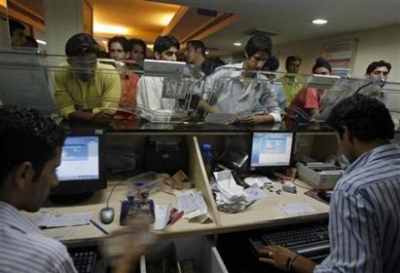
Bringing down government stakes would augment their capital.

After a gap of about five years, a public sector bank (PSB) has decided to rope in a cricketer to boost its brand.
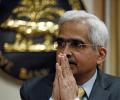
Economic activity has regained momentum from late-May after the dent caused by the second wave of COVID-19, and the pandemic's impact on the overall asset quality has been less than expected, Reserve Bank Governor Shaktikanta Das said on Thursday. However, Das flagged rising data breaches and cyber-attacks as among the risks for the recovering economy, along with others like firming global commodity prices. The governor also said the second wave had a "grievous toll" on the country.

The Reserve Bank on Wednesday said the non-performing assets of banks have gone up for the first time in six years in 2007-08 and the bad loans of new generation private banks and foreign lenders are "more noticeable" due to their aggressive lending to real estate and housing segments.

Need to conserve profits to strengthen the capital base is driving the effort.

After banks, it is now the turn of non-banking finance companies (NBFC) to see a spike in loan defaults and provisioning for non-performing assets ( NPAs ).

Engineering and construction major Larsen & Toubro (L&T) reported a 25 per cent rise in net profit attributable to the owners of the company for the January-March quarter of 2024-25, owing to higher revenues and an exceptional gain. For the quarter under review, L&T posted a consolidated net profit of Rs 5,497.3 crore, while revenue rose 10.9 per cent year-on-year (Y-o-Y) to Rs 74,392.28 crore.

The central bank says that PSU banks need to generate more internal capital and that the government should cut stake.
Managing expectations is a challenge for policymakers.

If the policy is extended to NBFCs and co-operative banks, they will have to disclose divergence in asset classification and provisioning during RBI inspections in their audited financial reports. Till now, these entities have been exempted from this. At present, there are more than 98,000 co-operative banks and 10,000 NBFCs. Sources said the RBI would concentrate on the top 50 co-operative banks and NBFCs.
The country's largest private sector lender HDFC Bank on Saturday reported a 23 per cent jump in standalone net profit to Rs 10,055.20 crore for the March quarter, led by growth in loan demand across categories and lower provisioning as bad loans were trimmed. The bank's net profit during the corresponding period of the previous fiscal stood at Rs 8,186.51 crore. "After providing Rs 2,989.5 crore for taxation, the bank earned a net profit of Rs 10,055.20 crore, an increase of 22.8 per cent over the quarter ended March 31, 2021," HDFC Bank said in a regulatory filing.

The bank, which has suffered reverses following a massive spike in dud assets and also the dismissal of its chief executive Chanda Kochhar over governance issues, however, hinted that the worse is behind.

The cumulative loss of 20 state-run lenders stood at Rs 14,000 crore during Q4
Despite a largely stable December quarter, investors booked profit in shares of IndusInd Bank (IIB) as an increase in slippages took them by surprise. Analysts, on their part, believe investors may, now, wait for actual delivery on slippage decline, potentially limiting near-term upside. "The management has indicated that corporate slippages (from legacy stressed book) have ended and inch up in consumer finance slippages was more one-off, and should meaningfully improve Q4FY24 onwards.
HDFC Bank Q1FY24 results analysis: Shares of HDFC Bank, the world's seventh largest financial entity, have advanced 2 per cent in two days, as against 1 per cent rise in the benchmark S&P BSE Sensex, after the lender reported its April-June quarter (Q1) results for financial year 2023-24 (FY24) on July 17. The S&P BSE Bankex index, meanwhile, has gained 1.3 per cent. While the near-term stock performance may remain sideways due to merger-related hiccups, analysts remain bullish on the stock's long-term prospects.

Khara will replace SBI Chairman Rajnish Kumar, whose three-year term comes to an end on October 7.

The banks total income for the September quarter this fiscal was Rs 17,324.3 crore.
Sequentially, the loss widened from Rs 2,416.37 crore in the third quarter ended December 2017.

Gross non-performing assets of public sector banks surged to 9.32 per cent (Rs 4.76 lakh crore) of advances in 2015-16, from 5.43 per cent (Rs 2.67 lakh crore) in 2014-15.

Commercial banks in the country continued with their improving asset quality trend in the October-December 2021 quarter with slippages remaining under control coupled with healthy recoveries and upgradation of asset classification. The 28-listed banks reported improvement in bottom line with net profits rising 64.1 per cent year-on-year (YoY) and 21.5 per cent sequentially. This is mostly on account of a fall in provisions and contingencies.

The banking sector emerged as an outlier when the rest of India Inc witnessed a slowdown in earnings in FY23. The combined net profit of listed public and private sector banks was up 39.4 per cent year-on-year (YoY) last financial year and their share in India's gross value added (GVA) or gross domestic product (GDP) at factor cost rose to a record high of nearly 1 per cent up, from 0.8 per cent a year ago. Listed banks' combined net profit grew to Rs 2.36 trillion in FY23, from Rs 1.69 trillion a year ago. In comparison, India GVA at current prices was up 15.2 per cent YoY at Rs 247 trillion in FY23; it was around Rs 214 trillion a year ago.

HDFC and HDFC Bank were the biggest losers in the Sensex pack, plunging 5.09 per cent and 3.32 per cent, respectively, after the private bank reported a rise in non-performing assets.

Many of India's sleepy state banks don't have the management capacity they need to tackle bad debts and deals at the same time, says Una Galani.

The financial sector has been deeply troubled since 2013. It is now in a full-blown crisis, warns Devangshu Datta.

A freely convertible country must have sound macroeconomic policies.
Bandhan Bank has declared disappointing results for the first quarter of the 2023-24 financial year (Q1FY24). While the market has been braced for known issues around microfinance exposures in West Bengal and Assam, there is higher stress in the portfolio. This means higher credit costs and poorer asset quality, leading to target downgrades by analysts.

The banking sector is set to move at a fast pace from hereon.

Raghuram Rajan, whose current three-year tenure ends on September 4, has already said no to a second term.

Recpaitalising banks through taxpayers' money will not solve the NPA problem.

Bank loan defaults rose to Rs 74,685 crore (Rs 746.85 billion) at the end of March 2010, with non-performing assets of public sector banks reaching Rs 57,301 crore (Rs 573.01 billion), Parliament was informed on Tuesday.

Over 75 per cent of the bank's Rs 175 crore NPA arises from Uttar Pradesh, Madhya Pradesh and Maharashtra.

The Reserve Bank Officers Cooperative Credit Society, which caters to the credit needs of RBI officers posted all over India, has a fixed deposit of Rs 105 crore in the bank on which the RBI has placed various curbs for six months following revelations of irregularities.
Weakness in HDFC Bank's net interest margin (NIM) might have bottomed out in the July-September quarter (Q2-FY24), analysts said on Tuesday, as most of the merger-related one-time adjustments have been done. The bank, they believe, should be able to grow from here on, allowing the stock to reverse its underperformance. "The weak NIM print was not unexpected given the merger and regulatory impact caused by the incremental cash reserve ratio (ICRR; 5-10 bps for the quarter).

'Opportunity is there in each segment of the market. There is opportunity in affordable and specifically governed by government initiatives as well as for housing for all.'
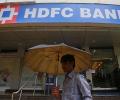
In the quarter gone by (Q3 of FY22), private lender HDFC Bank issued around 950,000 credit cards, its highest ever credit card issuance in any single quarter. Since the Reserve Bank of India (RBI) revoked the embargo on it in August 2021 to issue new credit cards, the lender has issued 1.37 million credit cards. This is according to a senior bank executive, who was present in an analysts' call after the lender's Q3 earnings. In Q3, we achieved the highest ever issuance, with 950,000 card issuances.
